Key takeaways
- Bidirectional charging distinguishes three use cases: V2H (Vehicle-to-Home), V2G (Vehicle-to-Grid) and V2L (Vehicle-to-Load).
- Anyone wanting to charge bidirectionally should look for the 'BiDi-Certified' status, the mere 'BiDi-Ready' label is not enough, according to Electrive.
- Market studies expect that around 80 per cent of vehicle platforms announced from 2027 onwards will be designed for AC and DC bidirectional charging.
- AC solutions are considered significantly cheaper than DC, the latter typically remain twice as expensive, according to Electrive.
- For owner-occupied homes and owners' associations (WEG), V2H/V2G potential opens up with PV self-consumption, peak shaving and variable electricity tariffs.
What is bidirectional charging?
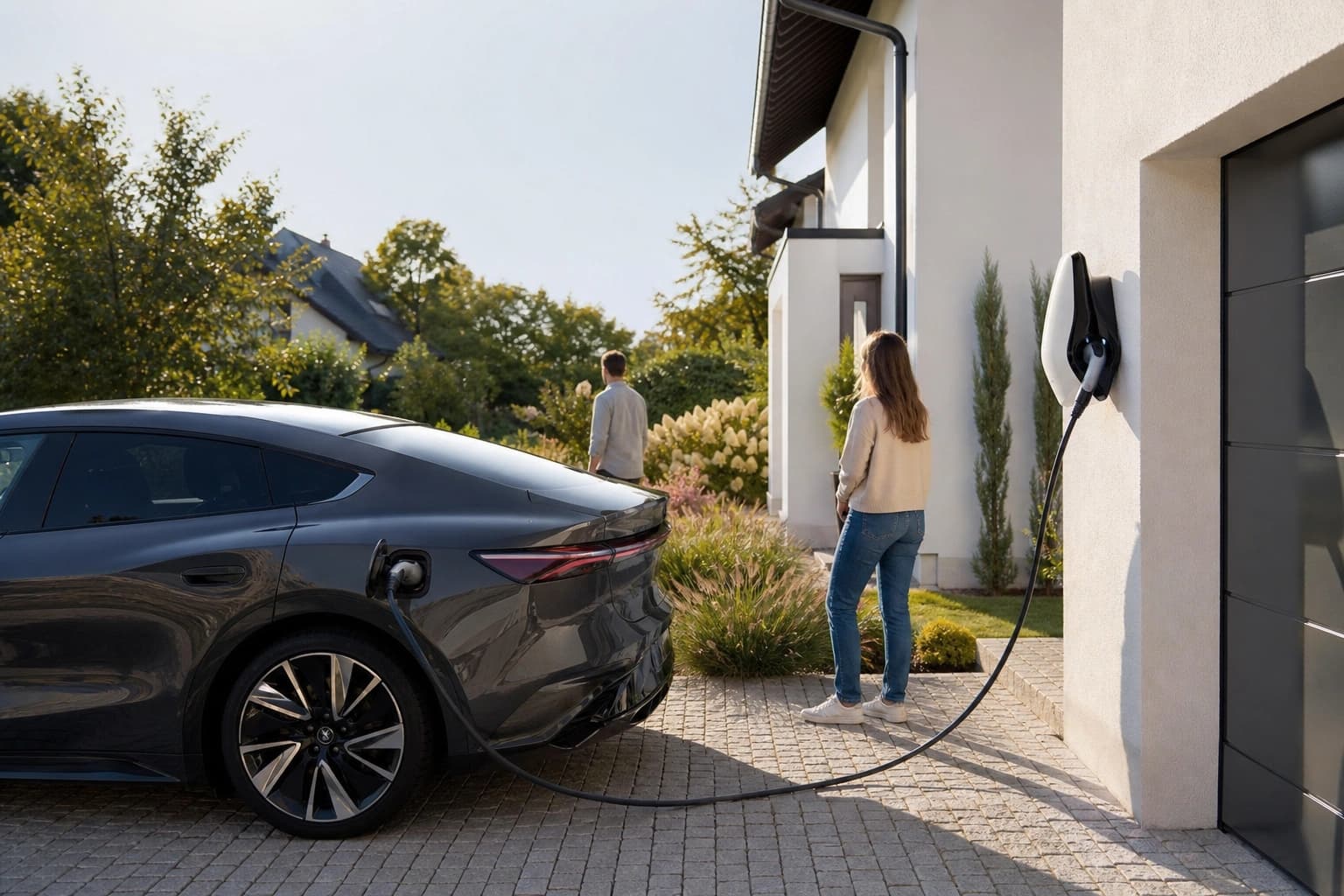
With bidirectional charging, electricity flows not only into the vehicle battery, but on request also back into the house, into another consumer device or into the public grid. The industry speaks of three main use cases: - V2H (Vehicle-to-Home): The car supplies the home itself with electricity, for example at night, during a power outage, or to increase PV self-consumption. - V2G (Vehicle-to-Grid): The car feeds electricity into the public grid and can thus buffer peak loads in the grid or participate in variable tariffs. - V2L (Vehicle-to-Load): The car runs individual 230 V consumer devices directly, from tools on a building site to e-bikes in the garden.
Technical Status 2026: BiDi-Ready Is Not the Same as BiDi-Certified
Bidirectional charging is no longer a concept in 2026, but technology that works in the field, albeit with one important caveat: the market is crowded with products carrying the mere 'BiDi-Ready' label and genuinely certified interoperable solutions. As Electrive emphasises in a post initiated by Compleo, 'BiDi-Ready is not enough', what matters is the 'BiDi-Certified' status, particularly in the AC area, where many providers currently only use the Ready label, according to Electrive.
Buying Tip: Look for 'BiDi-Certified'
When buying a wallbox, do not only look for the keyword 'bidirectional', but specifically for the certified status. Only this ensures that vehicle, charging station, energy management and grid work together in an interoperable way at protocol level.
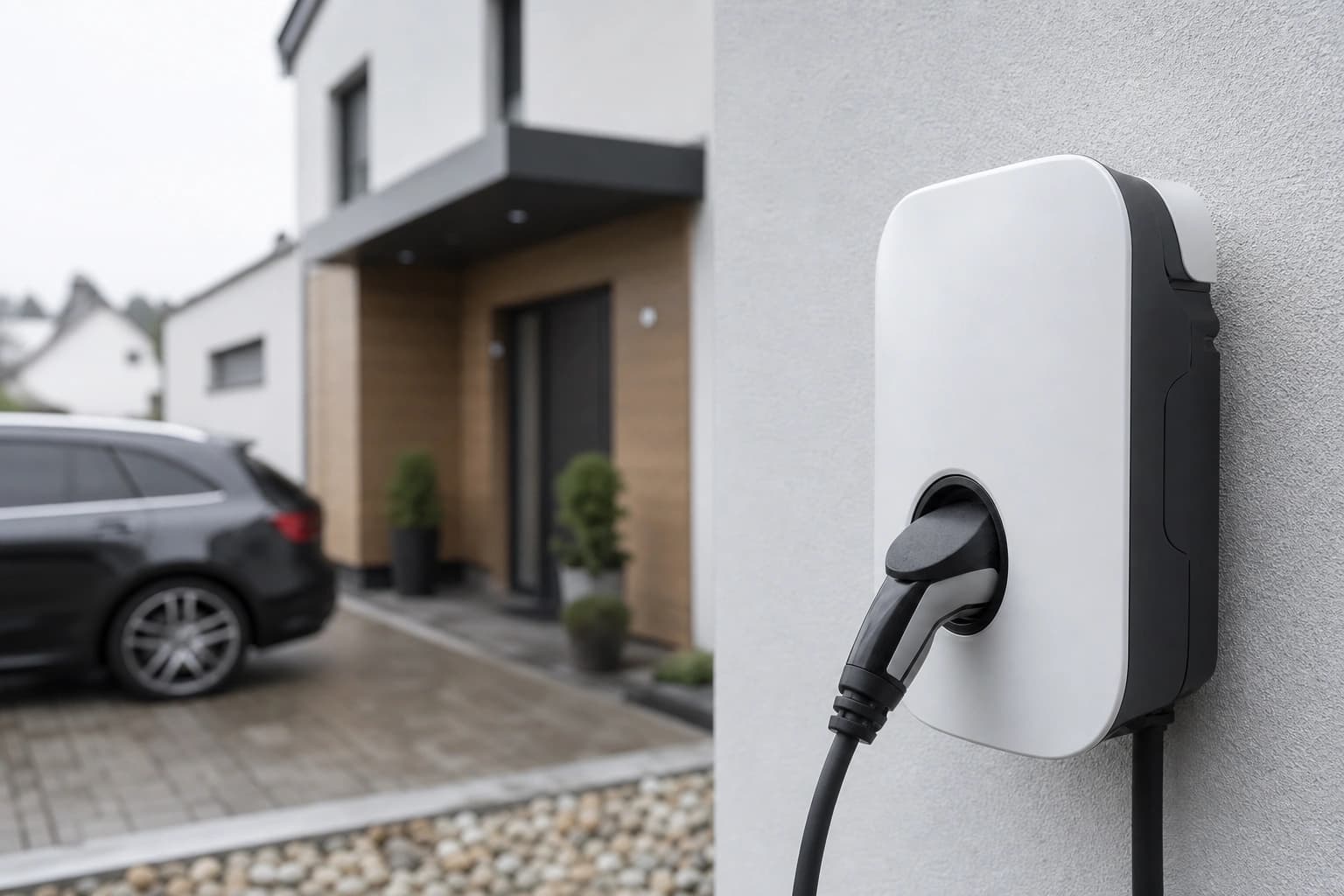
AC or DC, Which Approach Is Winning?
Bidirectional systems are fundamentally distinguished between AC-based and DC-based charging. According to market studies cited by Electrive, around 80 per cent of vehicle platforms announced from 2027 onwards will be designed for AC and DC bidirectional charging. One key reason: the necessary power electronics are already present in the vehicle, in DC solutions they sit additionally in the wallbox, which makes those systems typically twice as expensive, according to Electrive. AC, by contrast, uses the existing components in the car and is therefore considered a significantly more cost-effective and scalable option.
Opportunities for Owner-Occupied Homes and Owners' Associations
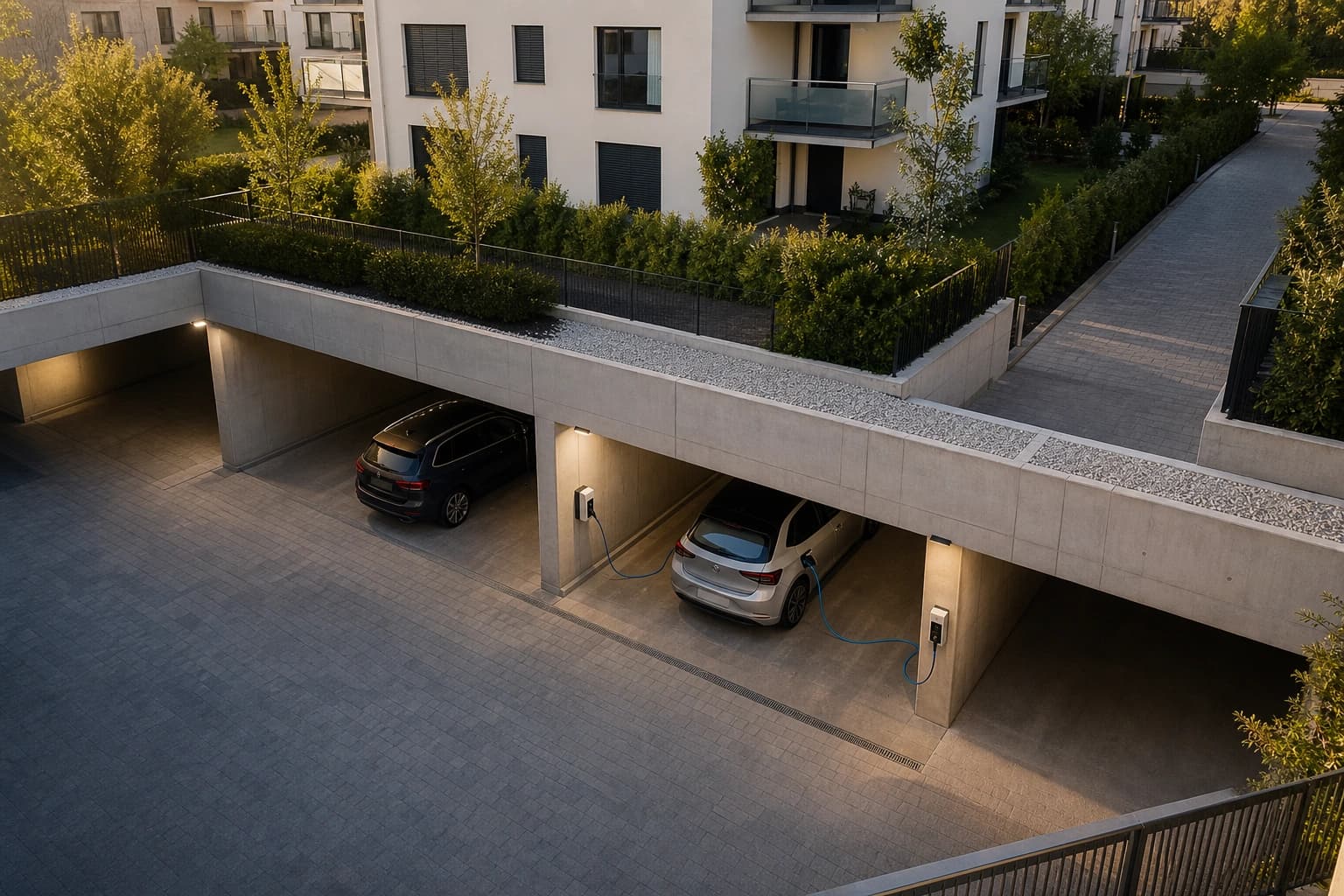
Bidirectional charging delivers its greatest benefit where vehicles are plugged in for many hours, that is, at home or at the workplace. For homeowners, Electrive identifies three levers: store PV electricity temporarily in the vehicle battery, shave household peak loads, and use variable electricity tariffs. V2G functionalities can also relieve the energy system and generate additional revenue for private customers. For owners' associations (WEG) and multi-family buildings, the topic is also relevant going forward: the same basic principles, PV self-consumption, peak shaving, variable tariffs, can in principle be applied to underground car parks with multiple wallboxes, for example to make better use of the building's grid connection or to use PV surplus from a rooftop system shared by several parties. The prerequisite is a coordinated load and energy management system, as well as a solution certified as 'BiDi-Certified' for multi-point operation.
What to Look Out for When Buying
- Certification over marketing label: actively ask about the 'BiDi-Certified' status and the specific standards or protocols the product meets.
- AC vs. DC concept: AC solutions use the power electronics in the vehicle and are significantly cheaper than DC systems, according to Electrive.
- Energy management: the wallbox should work with an EMS that jointly optimises PV generation, household load, variable tariffs and, where applicable, WEG loads.
- Vehicle compatibility: not every e-car already supports V2H, V2G or V2L, check the OEM specifications and planned software updates.
- Scalability: in WEGs and multi-family buildings, it is important that the solution can control multiple charging points in parallel and coordinate them with the building's grid connection.
Outlook: Why 2027 Will Become a Milestone
In 2027 several developments converge, according to Electrive: a new generation of bidirectional vehicle platforms from OEMs, regulation that is 'clearly picking up pace for AC', and an increasingly standardised interaction between vehicle, charging infrastructure, energy management and grid. Only this interaction makes bidirectional charging truly market-ready. Anyone planning now, whether an owner-occupier or a WEG, should keep technology, certification and the regulatory framework in view together, rather than orienting themselves only by the 'bidirectional' label.
Note on Funding Programmes
As of June 2026, the source at hand cites no specific KfW or BAFA funding rates for bidirectional wallboxes. Check current programmes (e.g. KfW 442, KfW 270 as well as state and municipal programmes) directly with the funding bodies, as terms can change quickly.
Frequently asked questions
- What is the difference between V2H, V2G and V2L?
- V2H (Vehicle-to-Home) feeds the home itself, V2G (Vehicle-to-Grid) feeds electricity back into the public grid, V2L (Vehicle-to-Load) runs individual 230 V consumer devices directly via the car.
- What does 'BiDi-Certified' mean?
- 'BiDi-Certified' identifies bidirectional solutions that are certified with regard to protocols, standards, grid requirements and system protection, and are therefore interoperable. The mere 'BiDi-Ready' label is not sufficient for this, according to Electrive.
- Is bidirectional charging worthwhile in an owner-occupied home?
- Providers and industry media see the greatest benefit when the e-car is plugged in for many hours and interaction with a PV system, household loads and variable electricity tariffs is possible. Reliable cost-benefit calculations depend heavily on the vehicle, the wallbox and the electricity tariff.
- Is bidirectional charging also relevant for WEGs and multi-family buildings?
- Yes, going forward, multiple wallboxes with bidirectional functionality in an underground car park can shave peak loads, use PV surplus from a rooftop system and relieve the building's grid connection. The prerequisite is a coordinated load and energy management system.
- When will bidirectional charging become market-ready?
- The industry sees 2027 as a decisive milestone, according to Electrive, in which regulation, new vehicle platforms and standardisation come together.