Key takeaways
- According to TransnetBW, the energy transition is at risk of failing not due to expansion, but due to overloaded grid connection processes
- Rising requests for PV, heat pumps and wallboxes are meeting limited staff capacity at the distribution grid operators
- Fragmented portals, isolated IT systems and faulty applications further extend processing times
- Standardisation and platform approaches like
einfachNETZare intended to harmonise the process from enquiry to commissioning - For WEGs and multi-family buildings, this means longer waiting times for multi-space charging projects
Grid connection backlog: Why bottlenecks are delaying wallbox and multi-space projects
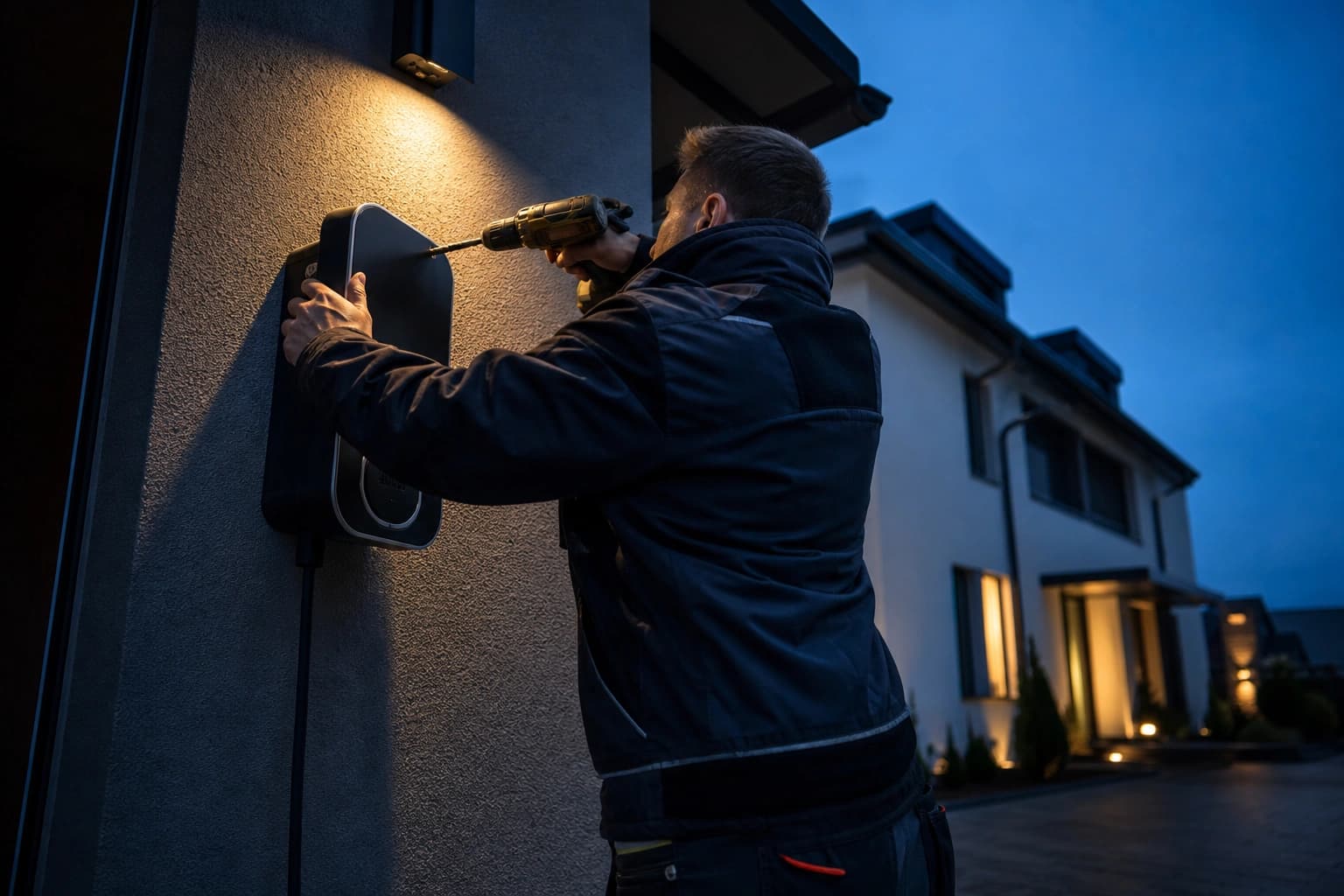
In Germany, the energy transition is increasingly at risk of failing not due to expansion, but due to overloaded grid connection processes. Nikolai Dürr, Specialist for Digital Platforms at transmission system operator TransnetBW, points this out in a current article at pv-magazine.de. This has tangible consequences, especially for wallbox and multi-space charging projects in homeowners' associations (WEG) and multi-family buildings: applications are piling up, processing times are increasing, and commissioning is being delayed.
From expansion to a process question
With the dynamic growth of photovoltaics, heat pumps and electromobility, the demands on distribution grid operators are increasing significantly. At the same time, strict regulatory requirements - such as from the EEG and EnWG amendments - are increasing the pressure to adapt and obliging the establishment of digital grid connection portals, according to Dürr. However, staffing resources remained limited while customers expected faster processing.
In practice, a recurring pattern is emerging according to Dürr: many grid connection processes have grown historically, are fragmented and strongly characterised by individual solutions. Different portals, paper-based intermediate steps or isolated IT systems lead to media breaks, redundant data and a high coordination effort. The consequence: queries, rework and delays are increasing. Faulty or incomplete applications further extend processing times and make it harder to meet regulatory deadlines.
Digitalisation alone is not enough
The obvious reaction is often the digitalisation of individual process steps. But if existing structures remain unchanged, complexity is merely mapped digitally without being reduced. Grid connection processes are often not thought through end-to-end, data flows are not standardised, and systems are only partially integrated - the actual bottleneck therefore lies in the interaction of the processes, not in any single system.
What is causing the backlog
According to TransnetBW, it is above all fragmented portals, isolated IT systems and faulty applications that are slowing down the process - this affects charging infrastructure as well as PV and heat pumps.
Standardisation and platform approaches as a solution path
Against this background, according to Dürr, an approach is gaining importance that goes beyond pure digitalisation: the consistent standardisation of processes in combination with platform-based solutions. Approaches such as the grid connection platform einfachNETZ show how such structures can be implemented in practice. The focus is on the end-to-end mapping and harmonisation of the entire grid connection process - from enquiry to commissioning.
The idea behind it: recurring requirements are no longer solved individually, but mapped in common, standardised structures. Especially in the case of regulatory changes, this creates considerable efficiency gains, as adjustments can be made centrally.
What this means for WEGs and multi-family buildings
For homeowners' associations and property managers, the backlog has immediate consequences: even if the WEG resolution is in place and the funding has been approved, the grid connection itself can become the critical path. Processing by the grid operator then determines when the first charging point actually delivers power - and thus also when the funding period starts to run.
Anyone initiating a multi-space project should, according to the article, submit the grid connection enquiry as early and as completely as possible. Queries are said to be the most common cause of delays.
„This is precisely where the real bottleneck of the energy transition lies - not in any single system, but in the interaction of the processes.“
— Nikolai Dürr, TransnetBW
Outlook
TransnetBW positions einfachNETZ as an example of how the entire grid connection process can be harmonised and digitalised. Whether and how quickly such platform approaches become established on a broad scale remains to be seen. What is clear: as long as requests for PV, heat pumps and wallboxes grow faster than processing capacities, owners' associations and property managers must expect longer waiting times.
Frequently asked questions
- Why is my wallbox connection currently taking so long?
- According to TransnetBW, sharply rising requests for PV, heat pumps and e-mobility are meeting limited staff capacity at the distribution grid operators; fragmented IT landscapes and faulty applications further extend processing times.
- What can WEGs and property managers do to shorten waiting times?
- Complete applications and early submission are regarded in the article as the most important levers to avoid queries and thus delays.
- What is `einfachNETZ`?
- According to Nikolai Dürr, it is a grid connection platform designed to map and harmonise the entire process from enquiry to commissioning end-to-end.
- Is the backlog limited to wallboxes?
- No, according to TransnetBW, the bottleneck affects the entire grid connection - from PV and heat pumps to charging infrastructure.