Key takeaways
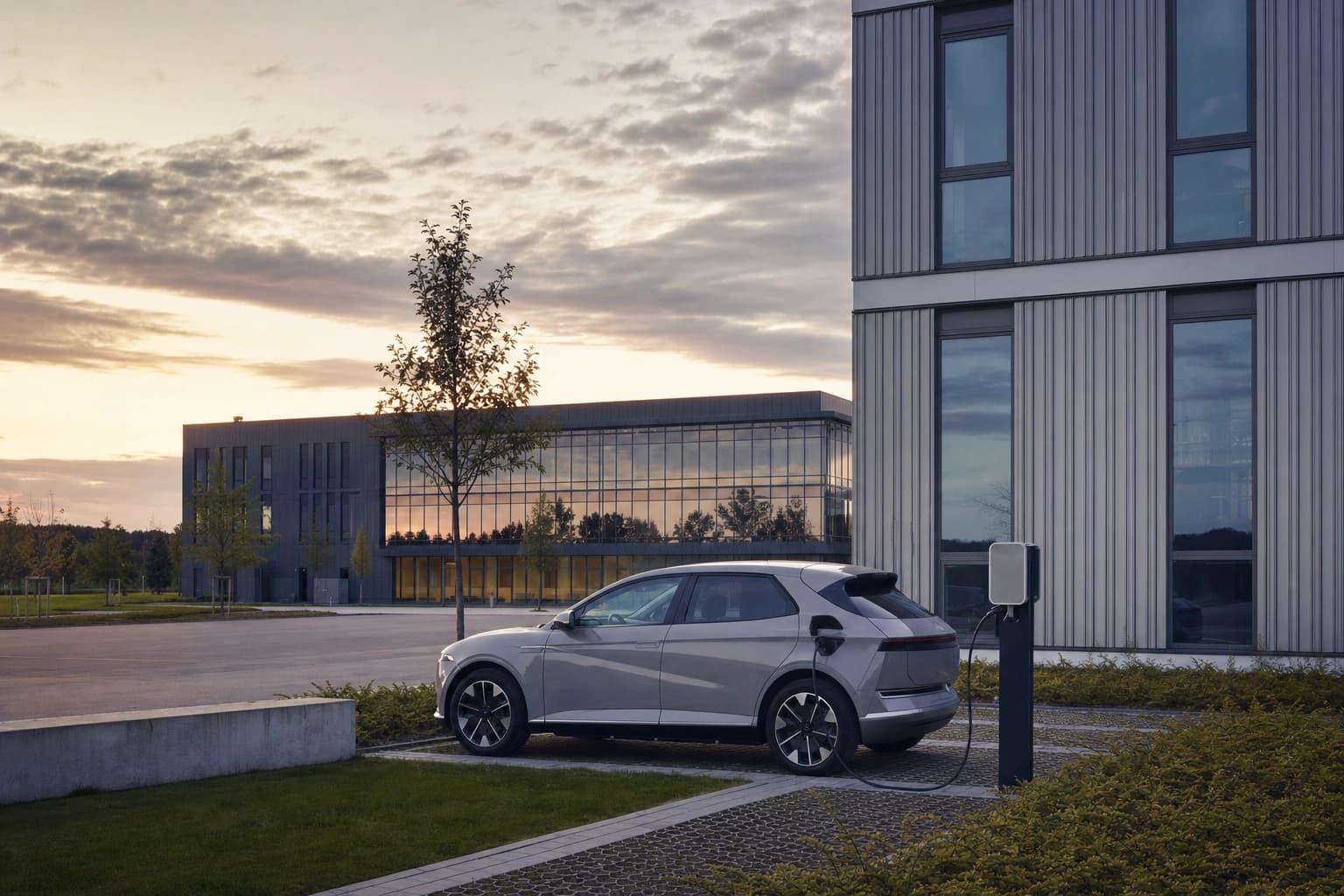
- AC wallboxes (11 or 22 kW) suit the company site when cars park for several hours, for example overnight or at the workplace.
- DC charging stations (from 50 kW) only pay off with short parking times: customer parking, pool vehicles or fleets with quick turnarounds.
- The choice depends on three factors: parking time, number of vehicles and available grid connection.
- Load management spreads the available power across several charging points and is almost always useful from three wallboxes upwards.
- Calibration-law-compliant hardware is required as soon as employees or customers pay for or get refunded the electricity.
What do AC and DC actually mean when charging?
AC stands for Alternating Current. DC stands for Direct Current. The public grid always supplies alternating current. But a battery can only store direct current.
With an AC wallbox, the alternating current flows straight into the car. There, a built-in charger, experts call it the onboard charger, converts the current to direct current. Only then does the battery charge.
With a DC charging station, the rectifier is already built into the unit. It converts the alternating current to direct current right on site. The onboard charger in the car is bypassed. That is why a DC station can charge much faster.
This technology has consequences for the site. DC stations cost far more to buy and install. They also need a stronger grid connection than AC wallboxes.

When is an AC wallbox enough at the company site?
AC wallboxes with 11 kW or 22 kW are today's standard at the company site. They work well when employees park their car for several hours. Company cars parked on site overnight or at weekends can also be charged reliably this way.
A typical electric car has a battery with around 60 to 80 kWh of storage (guide value). With a 22 kW wallbox, that battery is full in about three to four hours. That is plenty for most commuters. They arrive in the morning and drive home in the evening with a full battery.
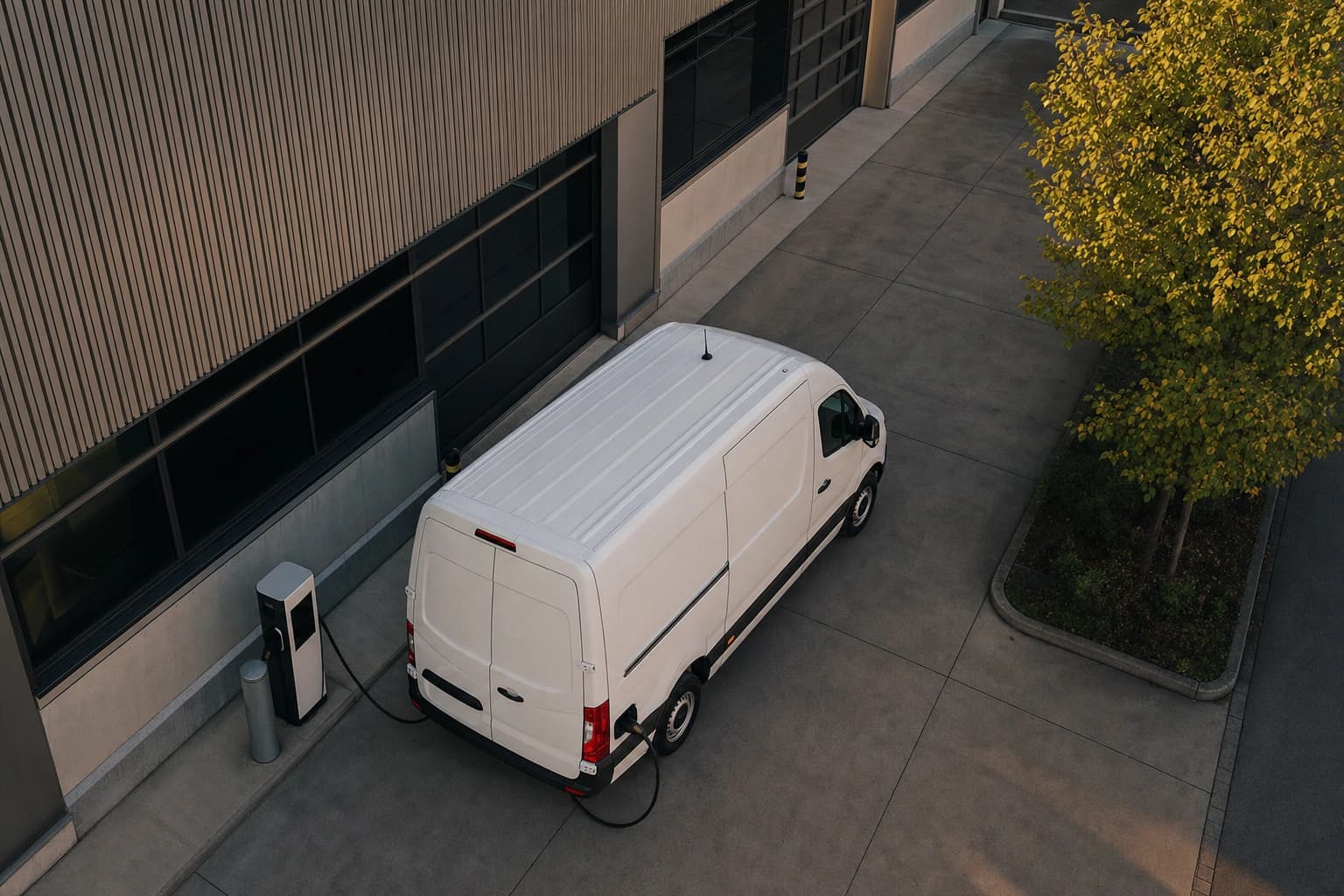
AC is also often the right choice for fleets in trades, care or logistics. The vehicles sit on the yard in the evenings and at weekends. Plenty of charging time is available. DC fast chargers rarely pay off here. They cost several times more and need a lot more power from the grid.
Rule of thumb for the first decision
Parking time over two hours? → AC wallbox 11 or 22 kW. Longer parking times don't suit DC. The high charging power simply can't be used.
When does a company need a DC fast charger?
DC charging makes sense when parking time is short. In practice there are three typical cases at the company site:
- Customers and visitors: hotels, restaurants or retailers want to offer guests plenty of range in 20 to 30 minutes. DC fits here.
- Fleets with quick turnarounds: delivery vehicles that leave in the morning and return briefly at lunchtime need fast top-ups. DC saves valuable time.
- Pool vehicles: a company car is used by several employees in succession. It needs to be full again by the lunch break.
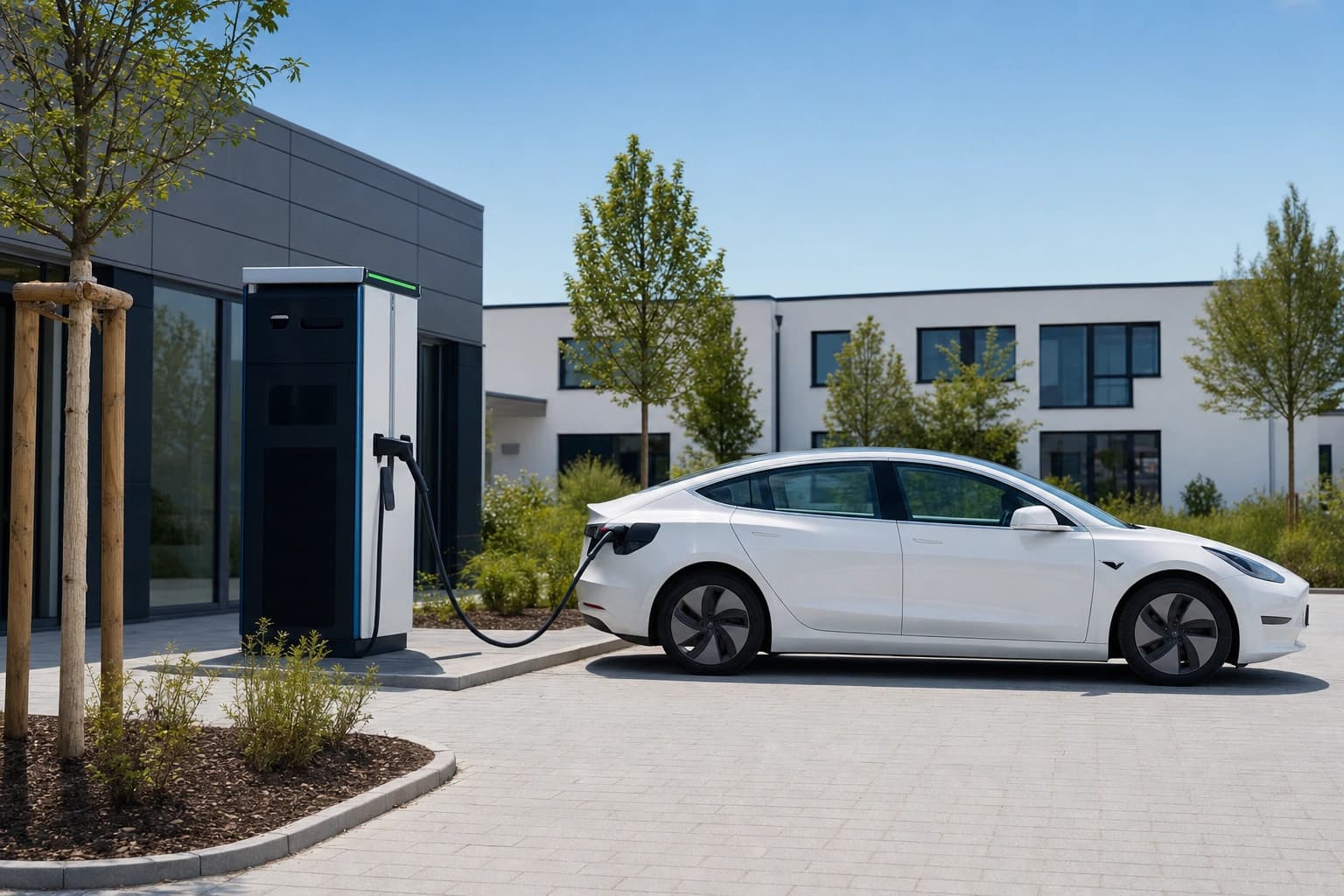
DC stations start at around 50 kW. HPC stations (High Power Charging) deliver 150 kW, 300 kW or more. With them, a battery reaches 80 percent in 15 to 30 minutes. Higher power always costs more, in the unit itself and in the grid connection.
What connected load and load management do you need?
Every charging station draws power from your site's grid connection. A typical commercial connection provides around 100 to 400 kW of capacity (guide value). A 22 kW wallbox needs roughly 22 kW extra. A 150 kW DC station needs 150 kW or more.
If only a few wallboxes are planned, the existing connection often suffices. With many charging points or DC stations, the grid operator must upgrade the connection. That takes time and money, depending on the site, several months and five-figure sums.
Load management spreads the available power across several charging points. That way every car gets power without overloading the grid connection. Load management is almost always useful with more than two or three charging points. It saves costly upgrades and allows later scaling.
| Criterion | AC wallbox (11/22 kW) | DC station (from 50 kW) |
|---|---|---|
| Typical parking time | from 2 hours | under 1 hour |
| Time to 80 % | approx. 2–4 hours | approx. 15–30 minutes |
| Grid connection (guide value) | 11–22 kW per point | 50–300+ kW per point |
| Purchase (guide value) | low to medium | medium to high |
| Use on site | Employees, fleet overnight | Customers, pool vehicles, quick fleet turnarounds |
Which legal requirements must you consider?
Three points matter for most company sites. Sorting them out early avoids nasty surprises at commissioning and billing.
- Calibration-law-compliant billing: if employees or customers pay for or get refunded the electricity, the charging station must be calibration-law-compliant. That means the delivered energy is calibrated and billed transparently. Only then does the billing stand up to the tax office and customers.
- §14a EnWG (German Energy Industry Act): since 2023, grid operators may briefly dim controllable consumers such as heat pumps and charging stations at peak times. Charging stations above 4.2 kW usually fall under this. In return you benefit from reduced grid fees.
- Charging Station Ordinance (LSV): it sets technical requirements for publicly accessible charging points. It often does not apply to employee-only car parks. For customer car parks or public sites it is mandatory.
Talk to the grid operator early
Before ordering hardware, check how much connected load your site has and whether an upgrade is possible. It often takes several months and determines how many charging points can realistically charge at the same time.
What funding is available for companies?
The federal government, state governments and KfW (Germany's state development bank) offer various programmes for commercial charging infrastructure. Three building blocks are relevant for many companies:
- KfW grants for companies, depending on the site and applicant group. Details and conditions change regularly.
- THG quota (greenhouse gas quota): charging station operators can earn revenue from avoided CO2 emissions. Even small sites can be refinanced this way.
- Tax-free charging under §3 No. 46 EStG (German Income Tax Act): electricity that employers provide to employees and company car users free or at a discount has been free of tax and levies since 2024.
Programmes and conditions change regularly. Up-to-date advice from an energy consultant or directly from KfW and BAFA (Germany's federal energy efficiency agency) is always worthwhile before investing.

AC or DC: the decision aid at a glance
An honest site analysis comes at the start of every plan. Only then is the hardware chosen. The following questions help set the direction quickly:
- How many vehicles charge when and for how long? Record arrival and departure times over at least one week.
- Is the grid connection strong enough? For DC or many AC points: involve the grid operator early.
- Are employees or customers involved? Then plan in calibration-law-compliant hardware.
- How many charging points are needed today and in three years? Load management saves later upgrades.
- Which funding suits the project? Advice before ordering helps avoid missing application deadlines.
Frequently asked questions
- How much does an AC wallbox at the company site cost with installation?
- An 11 or 22 kW wallbox with standard installation sits roughly in the low to mid four-figure range as a guide value. Long cable runs, underground car parks or grid upgrades can push the price up significantly. Only an on-site survey by a qualified electrician provides a firm quote.
- Do I always need a new grid connection for AC wallboxes?
- Not always. With a few 11 kW wallboxes, the existing connection often suffices. With many charging points or 22 kW units, the grid operator should check early whether an upgrade is needed.
- What is the difference between 11 kW and 22 kW?
- A 22 kW wallbox charges about twice as fast as an 11 kW wallbox for the same parking time. With both variants, the car's built-in charger converts the alternating current to direct current. For longer overnight parking, 11 kW is usually enough. 22 kW is mainly useful for larger batteries and shorter parking times.
- Is a DC station worth it for a trades or care company?
- As a rule, no. The vehicles sit on the yard at night and at weekends. AC wallboxes are enough and far cheaper. DC only pays off if vehicles return briefly to the yard several times during the day.