Key takeaways
- A fleet wallbox charges electric cars with alternating current at 11 kW or 22 kW via the Type 2 connector to IEC 62196.
- Load management (Load Balancing) shares the available grid power across several charge points and prevents costly peak loads.
- Plan around guide costs of about €1,500–3,000 per charge point (wallbox + standard installation). Underground car parks or long cable runs push this to €4,000–6,000+.
- Networked wallboxes coordinate multiple charge points and can talk to a PV system or battery storage.
- For staff or customer charging, companies need a clear access and billing plan.
What is a fleet wallbox, and how does it differ from a home model?
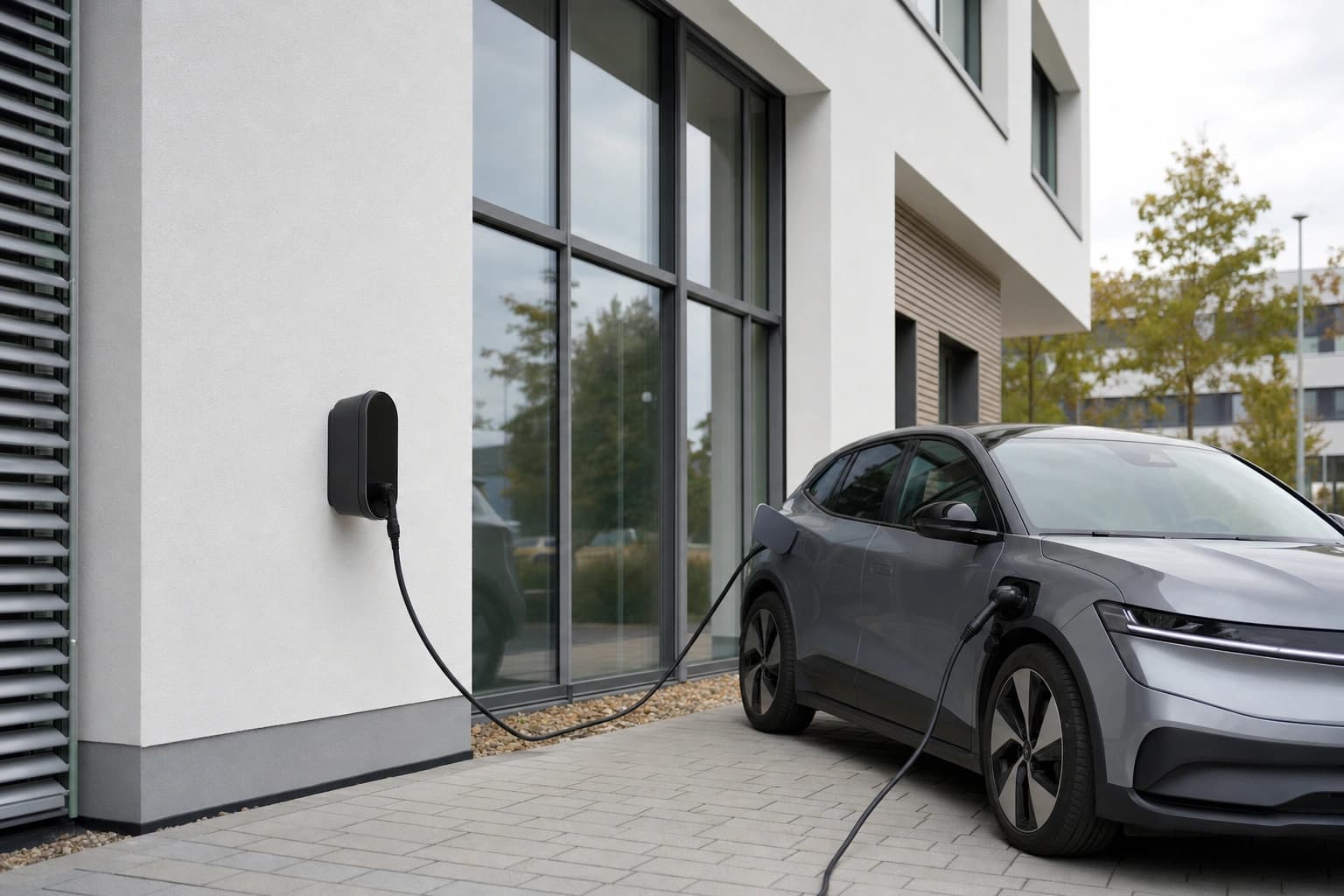
A wallbox (wall-mounted charger) is, according to Wikipedia, "a charging station for electric cars designed for mounting on a wall or pillar". It links to the power grid and communicates with the car's onboard charger about the available current.
Fleets mainly use networked models. According to Wikipedia, versions exist that "coordinate several charge points and communicate with the building installation (e.g. PV system, battery storage)". That ability is exactly what makes a fleet wallbox different.
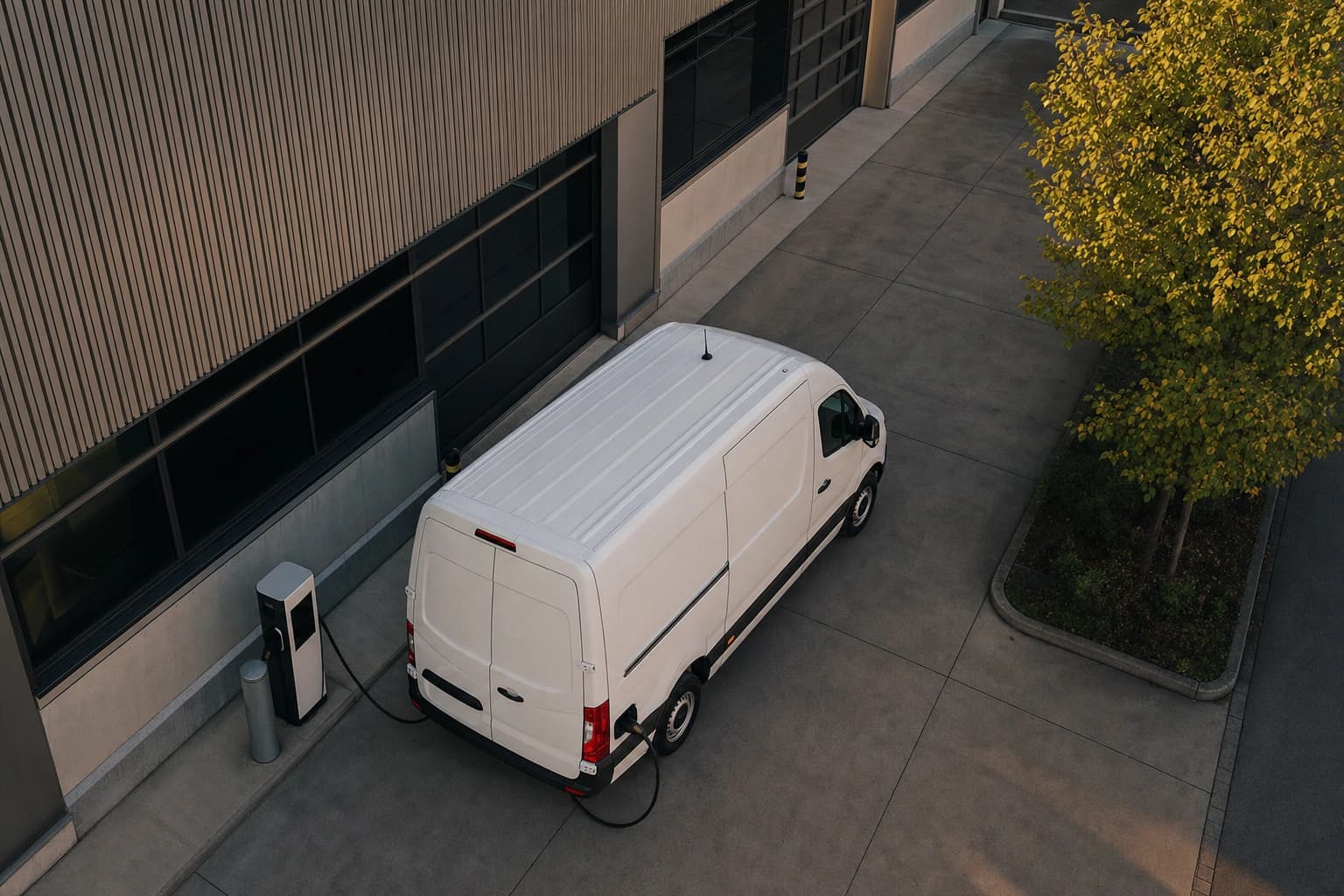
Unlike a simple home wallbox, a fleet model is built for continuous use, multiple users and several charge points at once. Typical features: load management, access control (RFID or app), a backend for billing, and a tough housing for outdoor use or underground car parks.
What charging power does a fleet need? (11 kW or 22 kW)
Fleets usually use two power classes: 11 kW and 22 kW. Both run on alternating current (AC) via the Type 2 connector.
An 11 kW wallbox is enough for typical overnight charging. A 22 kW wallbox roughly halves the charging time. It makes sense when shift work, larger batteries or short downtime slots need faster charging. According to Wikipedia, three-phase CEE connectors to IEC 60309 deliver "charging power up to 22 kW" (single-phase blue CEE connectors only up to 7.4 kW). A 22 kW wallbox therefore needs a three-phase supply and matching fuse protection.
DC rapid chargers (50–150+ kW) are rarely the first choice for fleets with standard depot charging. They need a much stronger grid connection and cost several times more per charge point. For overnight and shift charging, AC at 11/22 kW is more cost-effective.
| Feature | 11 kW AC | 22 kW AC | DC rapid charger (e.g. 50–150 kW) |
|---|---|---|---|
| Grid connection | Three-phase 16 A | Three-phase 32 A | High-voltage connection needed |
| Charging time ~60 kWh battery (guide) | approx. 5–6 h | approx. 2.5–3 h | approx. 20–40 min |
| Installation effort (guide) | Low to medium | Medium | High |
| Cost per charge point (guide) | approx. €1,500–2,500 | approx. €2,000–3,000 | approx. €20,000–50,000+ |
| Typical use | Overnight charging | Overnight & shift work | On-the-go rapid charging |
How much does a fleet wallbox cost with installation? (guide values)
A complete charging setup has three parts: the wallbox hardware, the electrical installation and, for several charge points, the load management hardware plus backend link.
An 11/22 kW wallbox including standard installation typically costs around €1,500–3,000 per charge point. With long cable runs, underground car parks, multiple charge points with load management or calibrated billing, costs quickly rise to €4,000–6,000+ per charge point (guide value).
What drives the costs?
The price range mainly comes down to: length of the cable run from the house connection to the wallbox, wall penetrations and ground works, number of charge points (more load management), calibrated models for staff or customer charging, and backend link (app, reporting, access control).
Quick rule for budget planning: a single wall charger with standard mounting sits at the lower guide range. A full charging setup in an underground car park with load management quickly lands in the upper range.
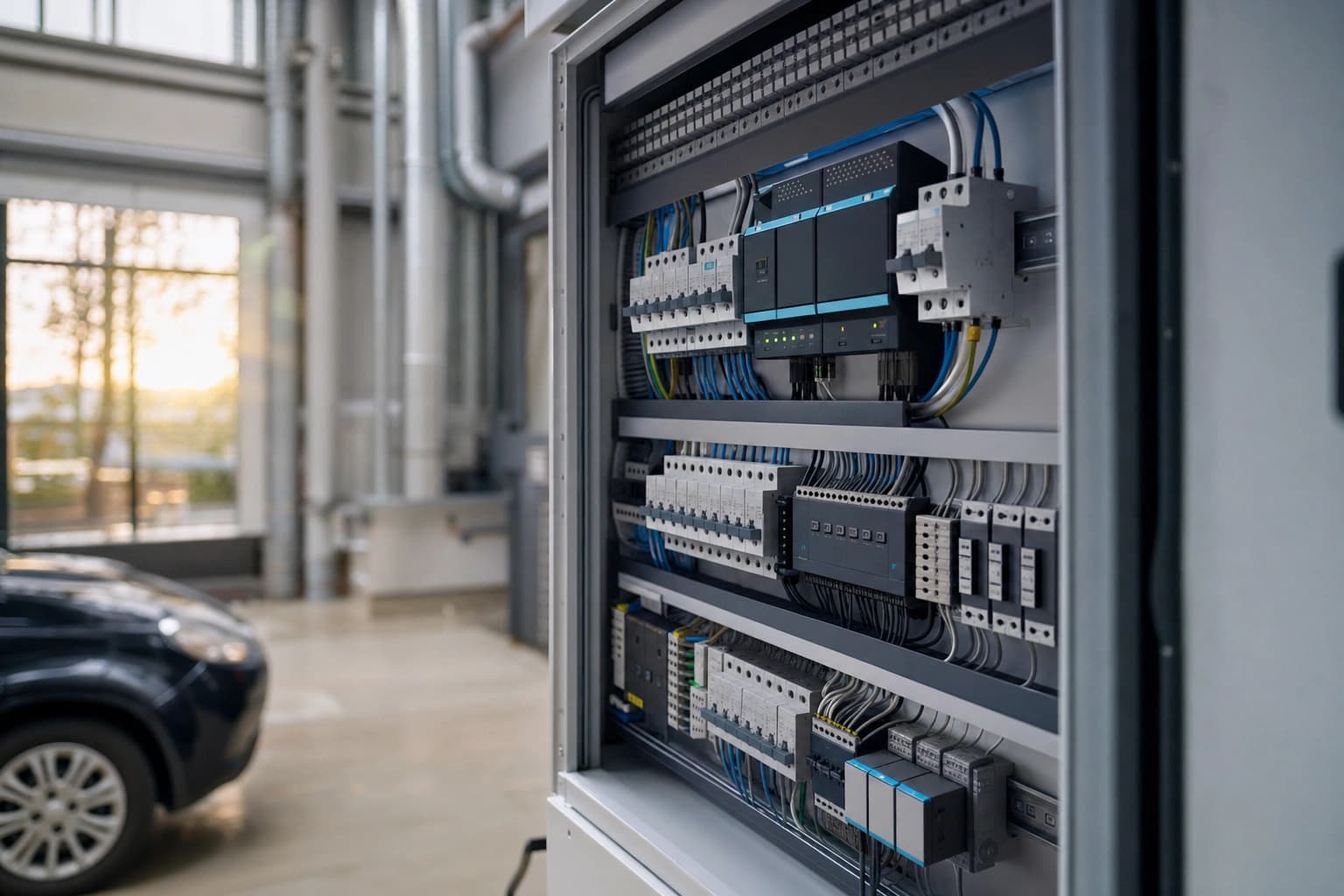
Load management, why is it a must for multiple charge points?
When more than one car charges at the same time on the same supply line, the maximum fuse rating can be exceeded, the circuit breaker trips. This is exactly where load management comes in. According to Wikipedia, "several wall-mounted chargers on a shared supply line can coordinate with each other regarding the maximum power at each charge point (Load Balancing)". In short: the wallboxes talk to each other and share the available power fairly.
In practice it works like this: a central controller watches the total load on the grid connection and shares the available power dynamically across all active charge points. If more power is requested than is available, it throttles the output rather than switching off. Each car keeps charging, just more slowly.
Benefits for companies:
- Less grid upgrade work: the existing connection is often enough.
- Lower peak loads that would otherwise drive up grid fees and operator costs.
- Scalability: new charge points can be added without immediately upgrading the grid connection.
- PV and storage integration: load management can prioritise solar power or buffer from a battery.
Which connections and standards do companies need?
In the EU the Type 2 connector to IEC 62196 is the standard. According to Wikipedia, "the Type 2 connector was adopted as the standard in IEC 62196 in the EU. In the EU, virtually all wall-mounted chargers sold there, and the majority of electric cars, have this connection." For a fleet wallbox that means: Type 2 is mandatory, adapters are not needed.
Another advantage, according to Wikipedia: "The wallbox communicates with the vehicle about the maximum available power and matches it with the maximum charging power the vehicle can handle, so that without any user action it always charges at the overall maximum possible power." This saves effort and prevents operating errors in day-to-day fleet use.
For wall mounting itself: at 22 kW, a wallbox is typically fed by a three-phase 32 A CEE supply line to IEC 60309. At 11 kW, a three-phase 16 A supply line is enough. The wallbox itself has either a Type 2 socket (cable stays in the car) or a permanently attached Type 2 cable.
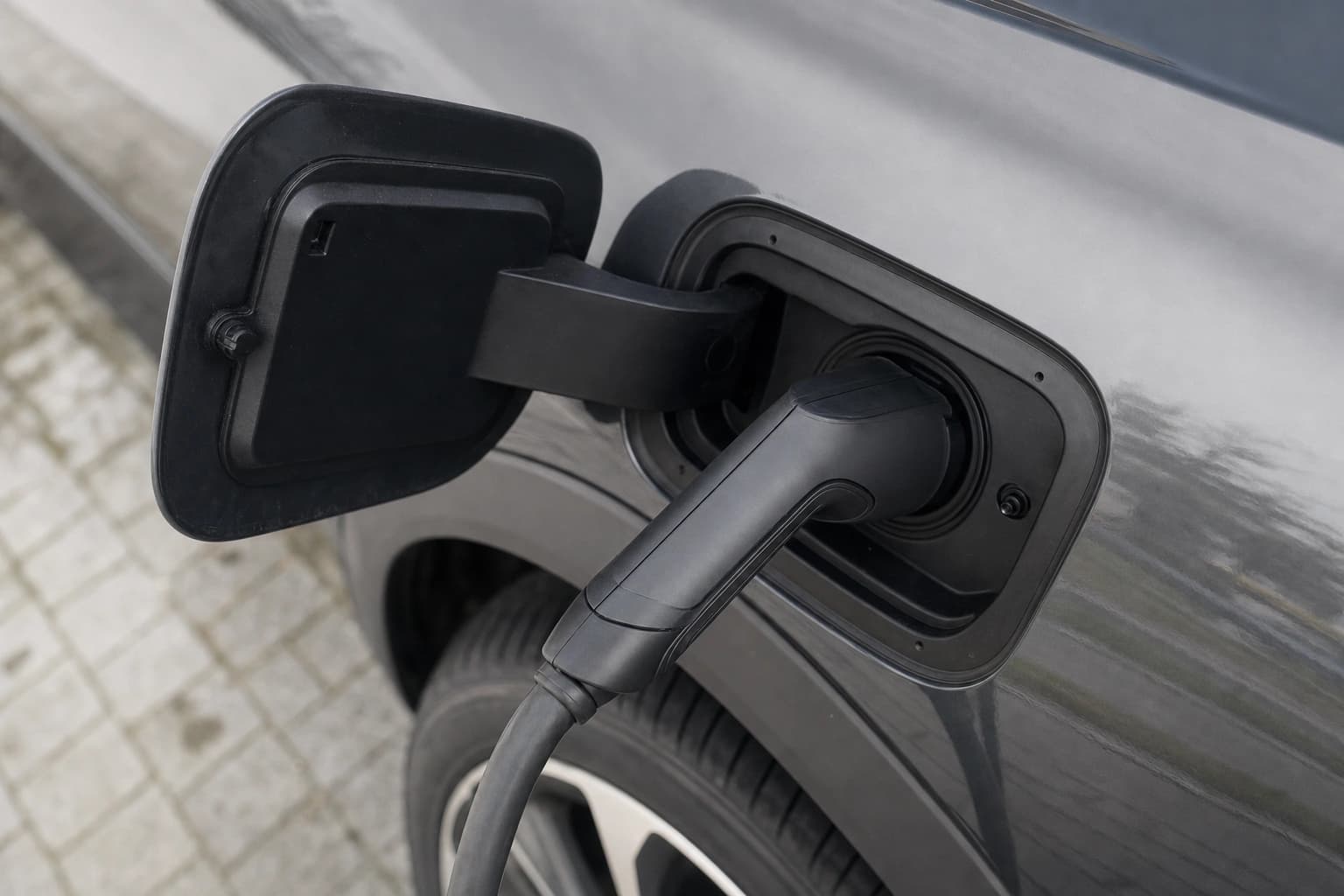
What to look for when choosing?, Checklist for buyers
Anyone buying a wallbox for a fleet should clarify the following points before requesting quotes. The answers determine the hardware, installation effort and total cost.
- Number of vehicles: sets the number of charge points and load management needs.
- Charging time window: overnight or shift work? This decides 11 vs. 22 kW.
- Location: wall, pillar, underground car park, outdoors? This sets the housing protection class and installation effort.
- Grid connection: what connection power is available? Load management yes/no.
- PV/storage integration: should the wallbox talk to a PV system or battery storage?
- Billing: do you need calibrated models for staff or customer charging?
- Backend: app, access control (RFID/app), load management, reporting.
Practical tip
Start with a clear needs analysis: how many vehicles charge, when, where and for how long? From that you get the number of charge points, the power class (11/22 kW) and the load management question. A blanket "one wallbox per car" rule is rarely cost-effective.
Conclusion: a fleet wallbox is infrastructure, not just a socket
A fleet wallbox is far more than a socket. It is part of the charging infrastructure, must work in harmony with the grid connection and be coordinated with other charge points. Planning with load management saves grid upgrades and keeps peak loads under control.
Selection follows a simple order: power class (11/22 kW) → number of charge points → load management → backend and billing. With this order and the cost guides above, you can produce a solid first estimate before asking for quotes.
Frequently asked questions
- What is the difference between 11 kW and 22 kW?
- Both use alternating current via Type 2. 22 kW charges roughly twice as fast as 11 kW, but needs a three-phase 32 A supply instead of 16 A. For overnight charging, 11 kW is often enough. For shift work, 22 kW is the better choice.
- Do I need load management?
- Yes, if you have several charge points on the same grid connection. Without load management, the fuse can trip as soon as several cars charge at once. Load Balancing shares the available power dynamically across all active charge points.
- Is DC rapid charging worth it for fleets?
- It depends on the use case. For overnight and depot charging, AC (11/22 kW) is more cost-effective. DC rapid chargers make more sense when you need short stays or top-up charges. They do need a much stronger grid connection and cost several times more per charge point.
- Which wallbox fits my existing connection?
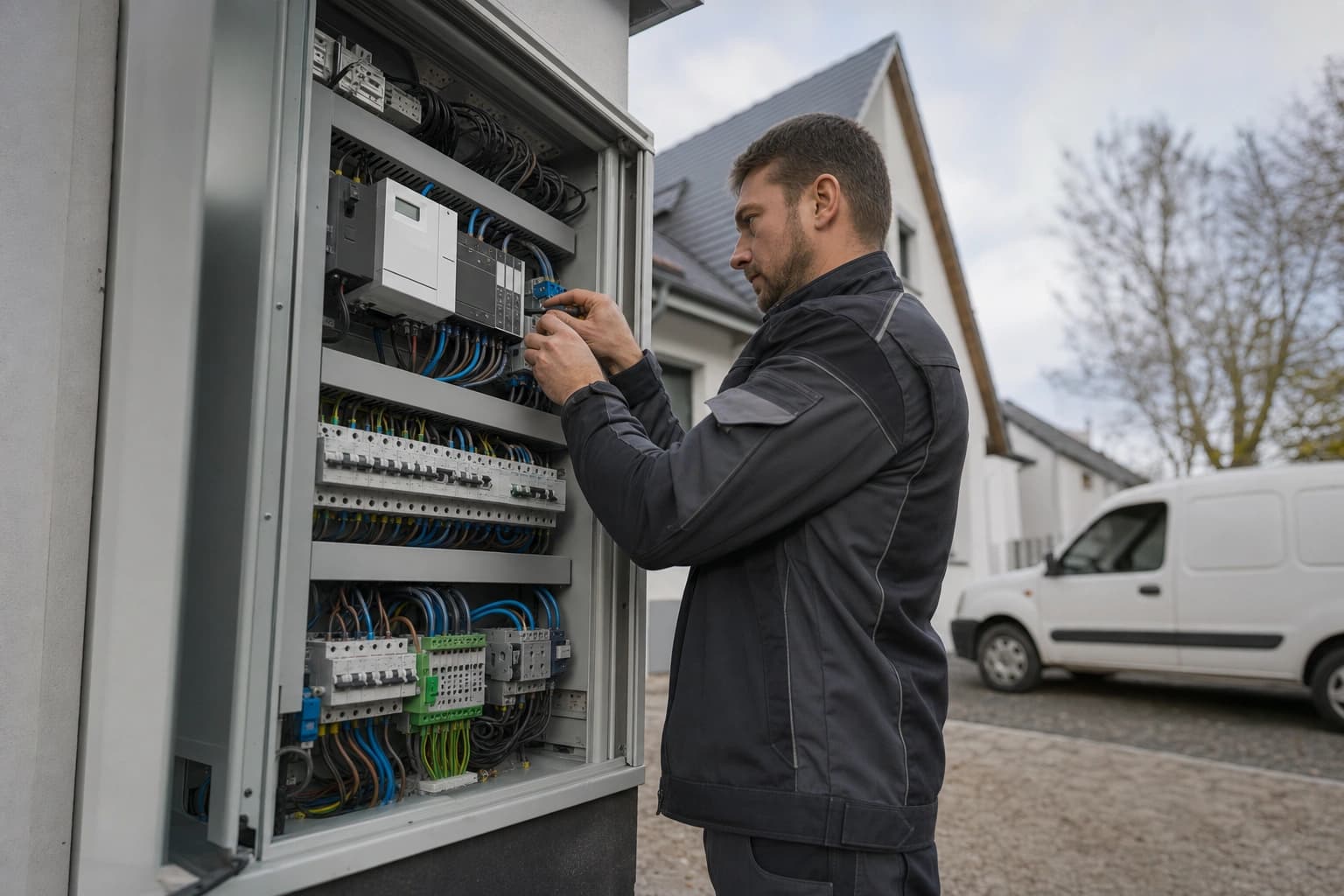
- It depends on the available connection power at the site. With limited connection power, load management is a must, otherwise there is not enough power for several cars. If in doubt, an electrical specialist checks the connection on site.